Insights | case studies. This article explores how an intermodal terminal operating system can transform logistics and terminal management through real-world examples. In today’s rapidly evolving logistics landscape, understanding the benefits and features of an intermodal terminal operating system is essential for efficiency.
How DB InfraGO Scaled Rail Terminal Throughput with OCR Driven Automation

• Customer: DB InfraGo (Deutsche Bahn, was DB Netze until 2024) with DB Cargo as end user
• Location: Multiple sites across Germany (Nuremberg, Hagen, Maschen, Mannheim, Munich, Seddin, Seelze)
• Industry: Rail infrastructure / freight rail
Visy Rail OCR portals for DB InfraGO since 2018
Visy has been delivering Rail OCR portals for DB InfraGO locations in Germany since 2018. One of the most important requirements set by the customer was to have extremely high quality images of passing cargo and automate data capture of wagons and cargo.
Today, Visy Rail OCR portals around Germany deliver to DB InfraGO high OCR hit rates of 98%, resulting in reliable and automated data processing workflows, as well as high quality images that are used in making repair assessments.
The results

Reliable performance
OCR hit rates of 98% across all locations

Recorded traffic events
High-quality imaging used for remote damage assessment, removing the need for track side inspection

Built for high volumes
Up to 35,000 wagons pass through each location every month

Full speed, higher throughput
DB InfraGO site Nuremberg set a throughput record of 38,000 wagons shortly after going live with Visy Train Gate
The challenge
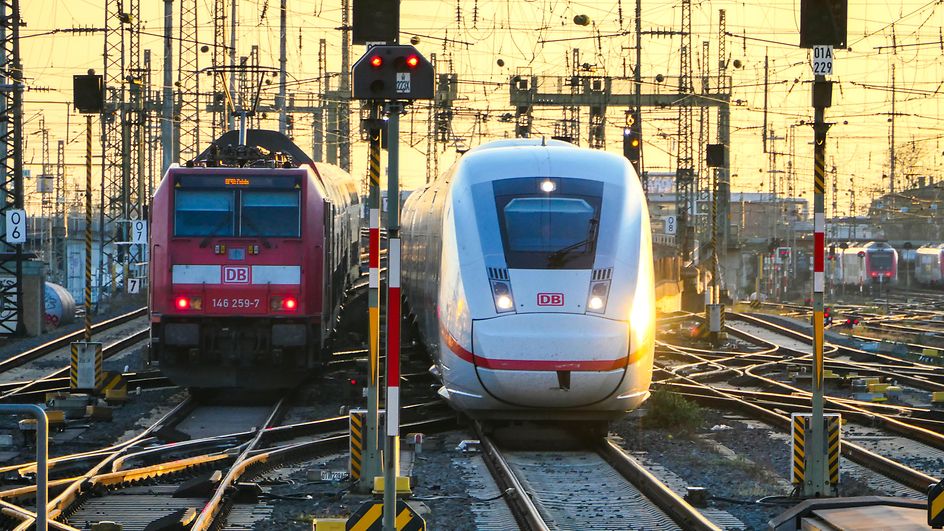
DB InfraGO AG is the rail infrastructure company of Deutsche Bahn AG in Germany. DB is responsible for a rail network spanning 33,300 kilometers, making it Europe’s largest rail infrastructure provider. As a massive player in the rail space, DB creates all the prerequisites for safe, environmentally friendly, and sustainable mobility in Germany and Europe.
As a new service, DB InfraGO wanted to offer its customers images of the passing wagons. One of their customers is DB Cargo, Europe’s leading freight railway. DB Cargo uses the images to digitize their maintenance processes especially to identify damage on their assets.
Before the implementation of Visy Train Gate systems, DB faced 3 main challenges:
- Wagon numbers are often in bad condition or even obstructed and therefore difficult to verify for a human
- The damage assessment process was slow, dangerous, and costly as it was performed by a clerk working on the tracks conducting physical inspections
- A standard OCR solution could not meet the individual site requirements due to the limited possibilities of portal placement and the terrain which forced trains to vary their speeds

The solution
DB InfraGO selected Visy as its OCR and Train Gate provider in 2018, with the first site going live soon after in Nuremberg. After the system met DB’s strict testing and performance criteria, Visy became its preferred OCR system provider, and the Train Gate solution was rolled out to six further locations: Hagen, Maschen, Mannheim, Munich, Seddin, and Seelze. More than 12 Visy Rail OCR portals are now deployed across these sites.
SYSTEMS & USER APPLICATIONS
Visy Rail OCR Portal
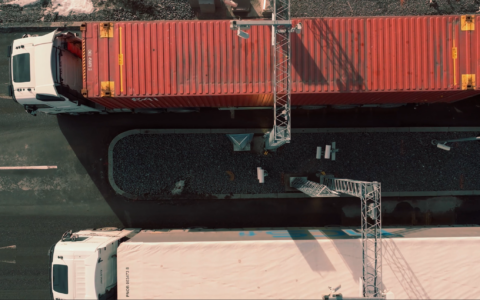
Visy Train OCR Portal automates the monitoring and data collection of rail cargo traffic. As trains pass through the portal, the system captures high-quality images of all wagon and container sides, and extracts key information in real time.
SYSTEMS & USER APPLICATIONS
Visy Train Gate
Visy Train Gate is the desktop management application at the center of the Visy Rail OCR Portal system. As trains move through the portal, all captured data is made available in the Train Gate.
High recognition rates, even on damaged wagons
Visy Rail OCR portals deliver recognition rates above 98% at every location, built on Visy’s Deep Neural Network (DNN). For wagons with obstructed numbers, Visy added RFID, so that wagons carrying transponders can be verified automatically where a camera read alone could fall short.
Remote damage inspection
Each portal carries up to nine ultra-high-resolution cameras. These provide the foundation for OCR and let clerks carry out their damage inspections remotely, so cargo keeps moving and never has to stop for inspection. Reviewing images from a remote office, a clerk can confirm that a wagon is safe to travel or flag it for repair – inspecting far more assets per day than the old track side process allowed. The clean data is also accessible in the intermodal terminal operating system.
Managing variable train speeds
Site conditions that affect train speed are handled by Visy Measurement feature. The laser-scanner-based system measures train speed in real time and adjusts the cameras and lighting to match. Train drivers operate as they normally would, with no need to account for the OCR system; the trains run safely and efficiently while Visy responds to their movement patterns and performs its imaging and OCR functions.
Direct data exchange with DB InfraGO’s intermodal terminal operating system
Interoperability with the intermodal terminal operating system is one of the most important features of the DB InfraGO installation. VisyXMLGate automatically shares wagon and cargo data with the InfraView system, exporting all Visy data directly into DB’s own user interface. Staff continue working in their internal system rather than switching to third-party screens: their front-end stays under their control with the feature set they want, while behind the scenes it is updated automatically with data from the Visy system.
Local delivery and support
Visy’s German partner, LMT GmbH, was central to delivering the system and provides ongoing maintenance and aftermarket support. With a physical presence in Germany, LMT can respond to any DB InfraGO site within a strict SLA window. Because the engineers who deployed the system also support it, performance issues are resolved quickly – keeping system uptime high.
View images


Contact us
Make your next big move.
Tell us what you want to automate. Our experts will review your inquiry and suggest a setup that fits your operation.